Family-owned in Marietta, GA · Nextdoor Neighborhood Fave 2024 & 2025
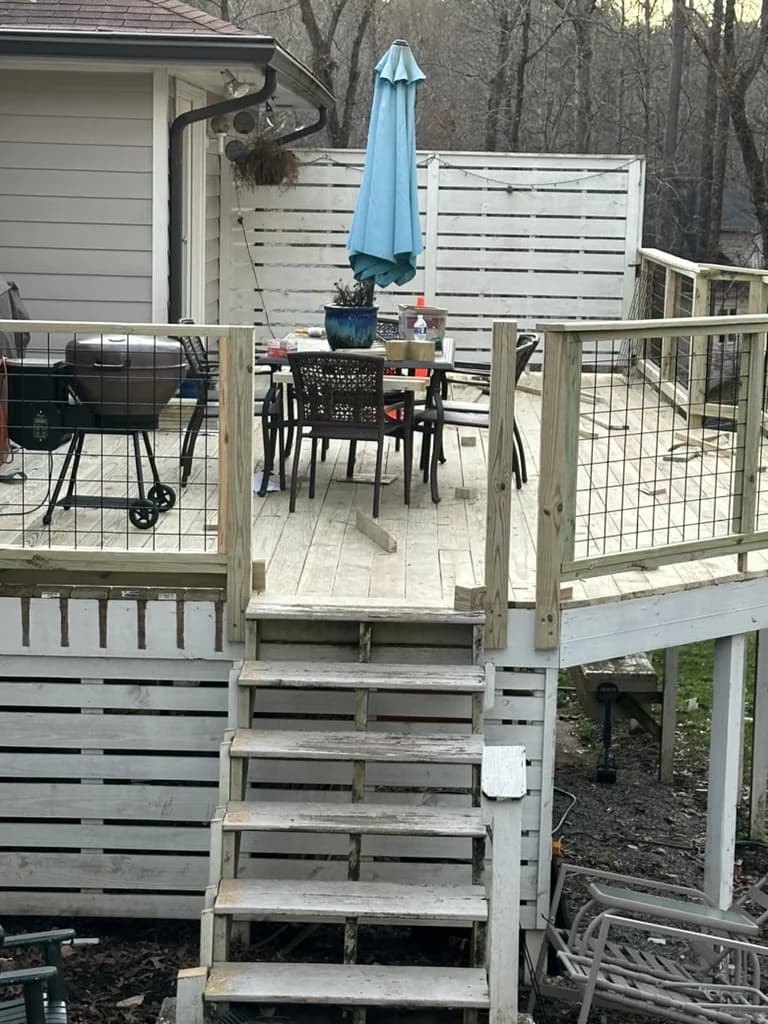
Rotting Deck Repair in Woodstock, GA
Wood rot is a serious structural concern that can spread quickly if not addressed. Expert diagnosis and repair by Woodstock's trusted deck specialists.
Our actual work
Built by us, near Woodstock
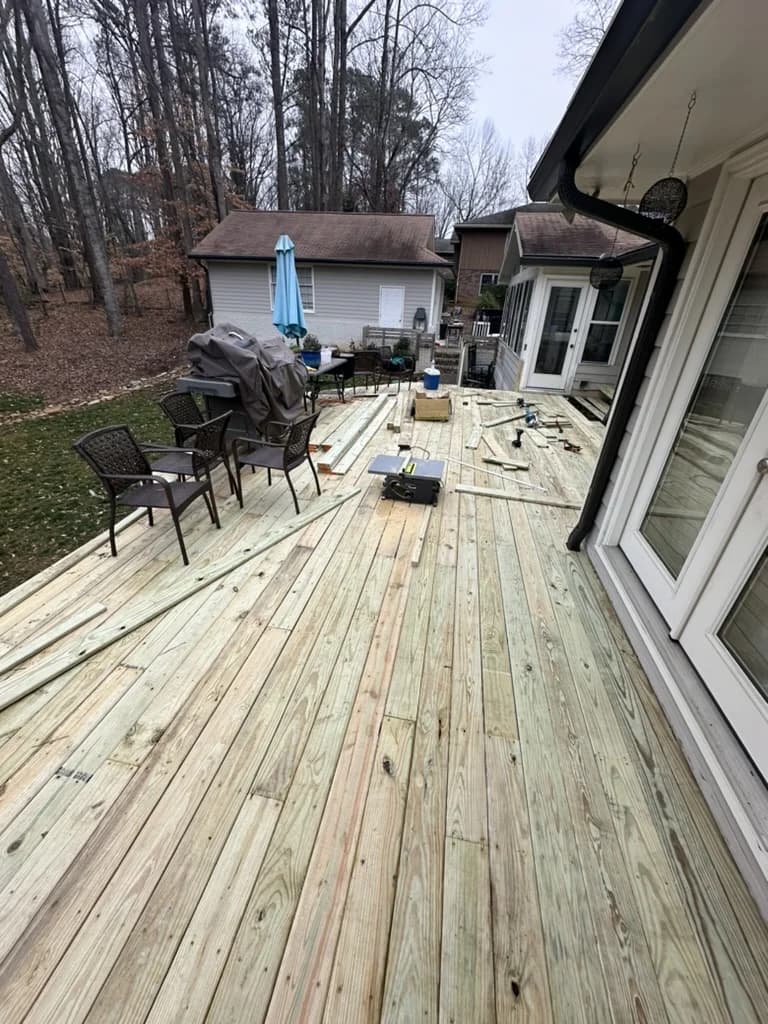

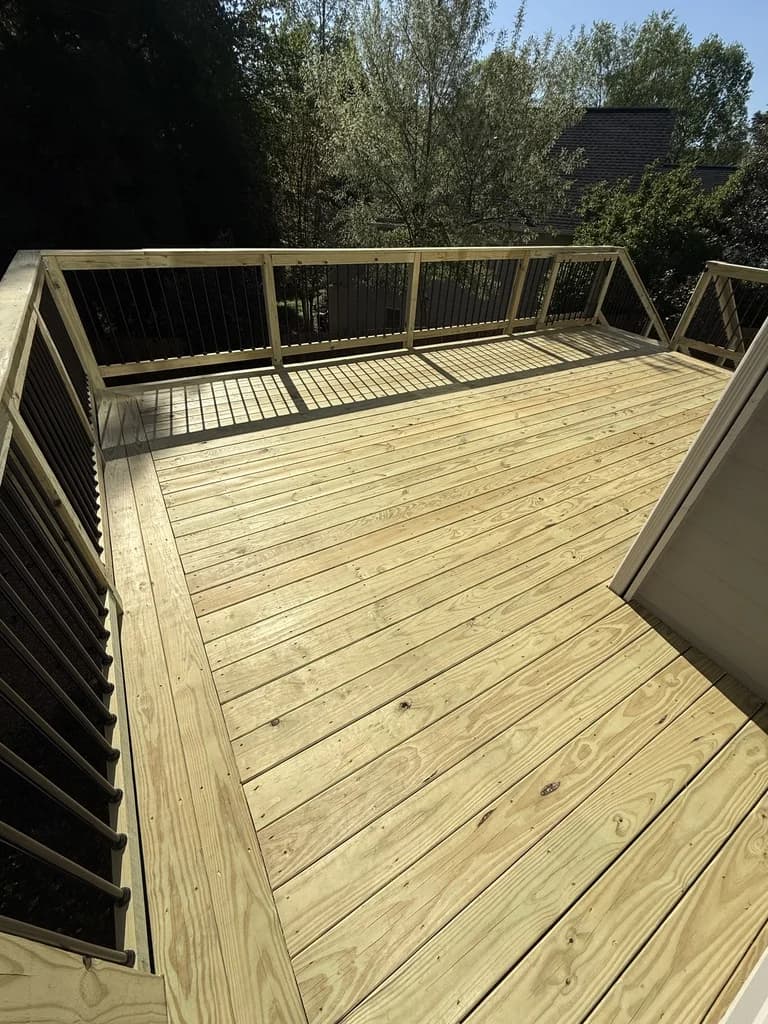
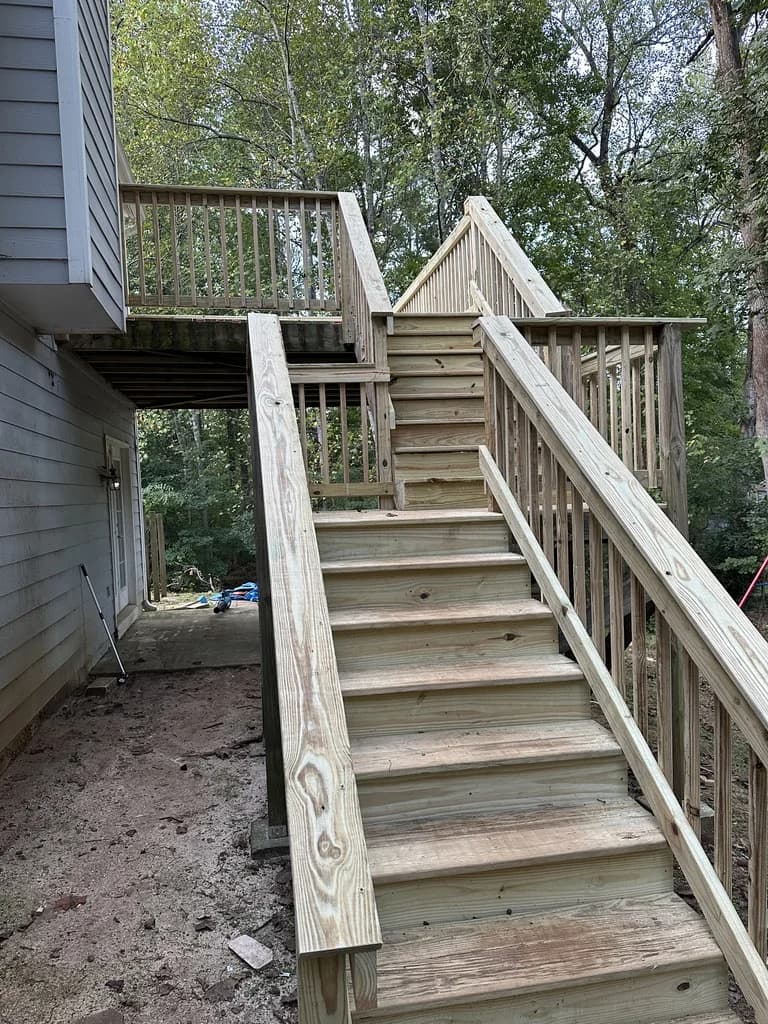
Rotting deck boards are one of the most common—and most serious—deck problems in Woodstock, GA. Moderate-high rot risk, especially in heavily wooded properties with limited airflow. What starts as a small soft spot can quickly spread to affect entire sections of decking, and if left untreated, rot can compromise your deck's structural integrity.
Rot repair is one of RBJ Contracting's most common jobs across Cherokee County. We know exactly what to look for, how to assess whether rot is surface-level or structural, and how to execute repairs that stop rot in its tracks while preventing future recurrence.
The good news: caught early, rot damage is highly repairable. A few replaced boards and improved drainage can extend your deck's life by a decade or more. The bad news: ignored rot spreads, and a repair that costs $500 today can become a $5,000+ rebuild next year.
Rotting Deck Repair Quick Facts for Woodstock
Timeline
2-5 days depending on extent
Cost Range
$500-$5,000+ depending on severity
Warranty
Work Guaranteed
Signs of Rotting Deck Boards
Wood rot is a serious structural concern that can spread quickly if not addressed. Look for these warning signs:
Common Causes
Understanding why rotting deck boards occurs helps prevent future issues:
Detailed Warning Signs in Woodstock
## How to Identify Rotting Deck Boards in Woodstock
**Visual Warning Signs** - **Discoloration**: Dark spots or streaks that don't wash away - **Surface texture changes**: Wood that looks "fuzzy" or fibrous - **Visible fungus**: White, gray, or green growth on board surfaces - **Crumbling edges**: Board edges that break apart easily - **Paint/stain failure**: Finish peeling or flaking off
**Physical Tests** - **The screwdriver test**: Press a screwdriver into suspicious areas—rotted wood will feel soft and give way easily - **The bounce test**: Walk across the deck—rotted areas may feel bouncy or springy - **The water test**: Rotted wood absorbs water quickly instead of beading
**Where Rot Typically Starts in Woodstock** Higher rainfall than metro core means more moisture exposure Common rot locations: 1. **Board ends**: Where water penetrates cut ends 2. **Joist intersections**: Where boards meet framing 3. **Near planters**: Trapped moisture from watering 4. **Shaded areas**: Dew and rain dry slowly 5. **Ground contact**: Posts touching soil or mulch 6. **Ledger board**: Against the house, often hidden
**Woodstock Climate Factor** Moderate-high rot risk, especially in heavily wooded properties with limited airflow. This means wood decks in Woodstock face higher rot risk than national averages. Annual inspections are essential, not optional.
Why This Happens in Woodstock
## Why Decks Rot in Woodstock
**Primary Cause: Moisture + Time** Rot is caused by fungal organisms that break down wood fibers. These fungi need three things: 1. Moisture (wood above 20% moisture content) 2. Oxygen (present in air) 3. Moderate temperature (40-90°F—Woodstock's climate is ideal for fungi)
**Woodstock-Specific Rot Factors**
*High Humidity* Higher rainfall than metro core means more moisture exposure Woodstock's humidity rarely drops below 50%, meaning wood never fully dries out between rains. This persistent dampness accelerates fungal growth.
*Rainfall Patterns* Summer thunderstorms are frequent but brief—just long enough to wet surfaces without time for proper drying before the next storm. This wet-dry-wet cycle is ideal for rot development.
*Shade Patterns* Woodstock's mature tree canopy provides wonderful shade but also prevents UV (which kills fungal spores) from reaching deck surfaces. Shaded decks rot faster.
*Clay Soil* Cherokee County's clay-heavy soil retains moisture near deck posts and footings. Splash-back from rain on clay keeps post bases perpetually damp.
**Human Factors That Accelerate Rot** - **Deferred maintenance**: Skipping annual sealing lets moisture penetrate - **Poor drainage**: Debris trapped between boards holds moisture - **Ground-level decks**: Less airflow underneath - **Planters on deck**: Constant watering and trapped moisture - **Gutter issues**: Overflow directed onto deck surface
Our Solutions
Board replacement
Professional board replacement services for Woodstock homeowners.
Structural assessment
Professional structural assessment services for Woodstock homeowners.
Drainage improvements
Professional drainage improvements services for Woodstock homeowners.
Composite conversion
Professional composite conversion services for Woodstock homeowners.
Preventive sealing
Professional preventive sealing services for Woodstock homeowners.
Our Repair Process
## How We Fix Rotting Decks in Woodstock
**Step 1: Comprehensive Assessment (Included Free)** Before any repair, we need to understand the full extent of damage: - Probe all visible rot to assess depth - Inspect hidden areas (under boards, around posts) - Check structural members (joists, beams, ledger) - Assess moisture sources and drainage issues - Document findings with photos
This assessment determines whether you need: - **Surface repair**: Replacing individual boards - **Section replacement**: Removing and rebuilding an area - **Structural repair**: Addressing framing damage - **Full rebuild**: When damage exceeds 30-40% of structure
**Step 2: Remove Damaged Material** We remove all rotted wood, plus 6-12" of apparently sound wood adjacent to rot. Fungal growth extends beyond visible damage, so conservative removal prevents recurrence.
**Step 3: Treat Remaining Wood** Any remaining wood adjacent to rot areas receives borate treatment, which: - Kills fungal spores - Prevents future fungal growth - Penetrates deep into wood fibers - Is EPA-approved and safe for residential use
**Step 4: Replace with Appropriate Materials** Replacement options: - **Pressure-treated lumber**: Budget-friendly, requires ongoing maintenance - **Cedar**: Natural rot resistance, beautiful appearance - **Trex composite**: Zero rot risk, 25-year warranty, no maintenance
We match existing materials unless you're upgrading to composite.
**Step 5: Address Root Causes** Rot repair isn't complete without addressing what caused it: - Improve drainage between boards - Redirect gutter overflow - Install proper flashing at ledger - Increase ground clearance where possible - Trim vegetation that blocks airflow
**Step 6: Protect the Investment** For wood repairs: - Apply quality penetrating stain/sealer - Recommend maintenance schedule - Offer ongoing maintenance service
For composite upgrades: - No staining needed - Simple cleaning instructions provided
Woodstock Local Considerations
## Woodstock Rot Repair Considerations
**Permit Requirements** In Cherokee County, structural rot repairs involving framing replacement may require permits. RBJ handles all permit requirements when applicable.
**HOA Notifications** Many Woodstock HOAs require notification before exterior work. We can provide documentation of repair scope and materials.
**Woodstock Climate Adaptation** Given Moderate-high rot risk, especially in heavily wooded properties with limited airflow, we recommend: *For existing wood decks:* - Annual professional inspection - Staining/sealing every 2 years (not 3) - Quarterly debris clearing between boards - Immediate attention to any soft spots
*For new/replacement decking:* - Strong consideration of composite materials - Trex composite comes with 25-year warranty - Zero ongoing rot risk - Higher upfront cost, lower lifetime cost
**Seasonal Timing** Early spring after winter weather reveals damage from the cold months. Best times for rot repair in Woodstock: - **Optimal**: September-November (after summer, before winter rain) - **Good**: March-May (before summer humidity peaks) - **Possible**: Year-round for urgent repairs
Woodstock Permit Information
Department: Cherokee County Building Inspections
Phone: (678) 493-6180
Deck Permit Required: Yes - for decks over 200 sq ft or any attached deck
Processing Time: 5-7 business days
Cherokee County is separate from Cobb and Fulton. Downtown Woodstock may have additional design overlay requirements.
Cost Breakdown for Woodstock
## Rot Repair Costs in Woodstock
**Typical Cost Ranges**
| Repair Type | Cost Range | Timeframe | |
|---|---|---|---|
| Single board replacement | $75-$150 | Same day | |
| Multiple boards (5-10) | $400-$800 | 1-2 days | |
| Section replacement (50 sq ft) | $1,500-$3,000 | 2-3 days | |
| Structural repair (joists/beams) | $2,000-$5,000+ | 3-5 days | |
| Full deck replacement | $8,000-$25,000+ | 1-3 weeks |
**Cost Factors** - **Extent of damage**: More rot = higher cost - **Structural involvement**: Framing repairs add significantly - **Material choice**: Composite costs more but lasts longer - **Accessibility**: Second-story or difficult access increases labor - **Permit requirements**: Add $100-$300 if required
**The Cost of Waiting** Rot spreads exponentially. A $500 repair today can become: - $1,500 in 6 months - $3,000+ in 1 year - Full replacement in 2-3 years
**Free Inspection Offer** RBJ provides free rot assessments for Woodstock homeowners. We'll tell you exactly what needs repair, what can wait, and provide written estimates with no pressure.
DIY vs Professional Repair
## Should You DIY Rot Repair in Woodstock?
**When DIY Might Work** - Single surface board with no structural damage - You have woodworking experience - You can properly assess rot extent - You're confident in matching materials - The area is easily accessible
**When to Call RBJ** - Multiple boards affected - Any sign of structural involvement - Rot near ledger board or posts - You're uncertain about extent - Second-story or difficult access - You want it done right, with warranty
**DIY Risks** - **Underestimating extent**: What looks like one rotted board often involves more - **Missing structural damage**: Hidden rot in joists or beams is dangerous - **Improper treatment**: Failure to treat adjacent wood leads to recurrence - **Drainage issues**: Not addressing cause means rot returns - **Code compliance**: Structural repairs may require permits
**Professional Advantages** - Trained eye spots hidden damage - Proper treatment prevents recurrence - Address underlying causes - Warranty on workmanship - Peace of mind
**Woodstock Recommendation** Given Moderate-high rot risk, especially in heavily wooded properties with limited airflow, we recommend professional assessment for any rot concern. A free 30-minute inspection could save thousands in future repairs.
Prevention Tips for Woodstock Homeowners
Outdoor living designs for Woodstock's active lifestyle.. Follow these tips to prevent rotting deck boards:
Complete Prevention Guide
## Preventing Deck Rot in Woodstock
**Annual Maintenance Schedule**
*Spring (March-April)* - Deep clean entire deck surface - Clear all debris from board gaps - Inspect for winter damage - Check drainage patterns - Schedule staining if due
*Summer (June-July)* - Monitor high-moisture areas - Check around planters and furniture - Ensure gutters aren't overflowing onto deck - Look for new soft spots
*Fall (September-October)* - Final cleaning before leaf season - Apply stain/sealer if due - Trim vegetation touching deck - Prepare for fall rain season
*Winter (December-January)* - Remove accumulated debris - Check for standing water issues - Look for ice damage (rare in Woodstock but possible)
**Staining/Sealing Schedule** In Woodstock's climate, stain or seal every 2 years (not the 3 years often recommended for drier climates). Signs you're due: - Water no longer beads on surface - Color has faded significantly - Wood feels rough or gray - It's been 2+ years
**Drainage Improvements** - Maintain 1/8" gaps between boards - Keep ground clearance (6"+ if possible) - Angle boards slightly for water runoff - Clear downspouts away from deck
**When to Consider Composite** If you're replacing more than 30% of your deck surface, consider upgrading to Trex composite. The marginal additional cost buys: - Zero future rot risk - No ongoing staining costs - 25-year warranty - More time enjoying, less time maintaining
Your Woodstock Deck Repair Experts
Jake
Jake co-founded RBJ Contracting in 2018 with a passion for quality craftsmanship. With extensive experience in deck construction and home improvement, he oversees project management and client relations. Jake is dedicated to delivering exceptional results and ensuring every customer is 100% satisfied.
Blaise
Blaise brings expert craftsmanship to every RBJ project. Specializing in both interior and exterior work, he ensures every detail meets the highest standards. His attention to detail and commitment to quality have been instrumental in achieving RBJ's 100% satisfaction rate.
Rotting Deck Repair FAQ for Woodstock
Other Deck Issues We Fix in Woodstock
Free quotes · Owner on every job
Need Rotting Deck Repair in Woodstock?
Get a free inspection and honest assessment from our deck repair experts
Most quotes delivered within 24 hours · No obligation, ever